

Species You Can Sight-Fish on Mosquito Lagoon Charters: Redfish, Trout, Black Drum, Snook, Tarpon
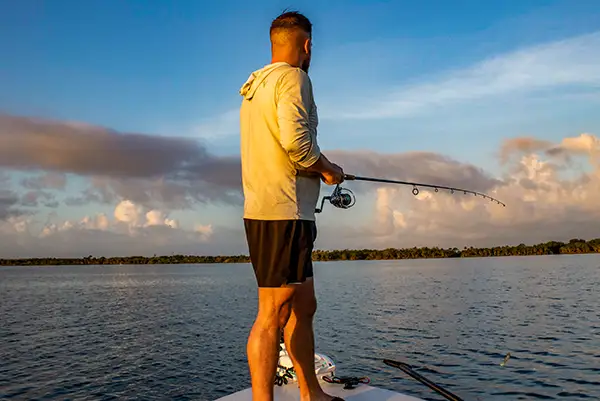
Mosquito Lagoon offers some of the best shallow-water sight fishing in Florida, with year-round opportunities to visually target redfish, spotted seatrout, black drum, snook, and tarpon. The shallow water flats make it a great location for anglers who want to consistently see their targets before making the cast. Regardless of the species you are after, one theme remains the same on every charter: casting accuracy is the most important factor. In water this shallow, fish react instantly to noise, shadows, and sloppy presentations. The anglers who succeed are those who can lead a fish naturally, land the bait softly, and adjust quickly when the direction changes. What follows is a detailed breakdown of the main species we sight-fish on the Mosquito Lagoon and Indian River Lagoon and the practical techniques that work for each one.
Redfish
Redfish are the headliner of Mosquito Lagoon and the species most anglers come here for. They tail in grass beds, lounge in sandy depressions, cruise shorelines, and feed in only a foot or two of water. Most days you can see their backs, tails, wakes, or shadows long before they spook. The key is to lead the fish by a small but deliberate distance—close enough for them to find it, far enough to avoid blowing them out. A cast dropped directly on them sends them running every time. Fly anglers do best with shrimp or baitfish patterns on floating lines, while spin anglers rely on soft plastics and weedless offerings. Once the fly or lure lands, subtle movement is all that’s needed. When the cast is placed correctly, redfish usually decide immediately whether they are going to eat.
Redfish are also the easiest of our fish to spot because of their color. reds that have been hanging out over grass will have a deep reddish gold hue with a bright blue stripe at the end of the tail. The fish found on more sandy bottom will have a pink tint. Looking for these colors, as well as the sun reflecting off their white belly allows us to see them in the water even if they are not breaking the surface or pushing a wake
Spotted Seatrout
Large seatrout are masters of camouflage, often lying motionless on sandy bottom or nestled inside sandy potholes surrounded by thick grass. Unlike most redfish, they will charge from a considerable distance to chase down and crab a lure or fly. They are very sensitive, however to things plopping down too close to them. This means presentation has to be exact. Your cast should land several feet ahead of the fish and settle softly enough not to disturb them. If you drop right on top of a big trout, it’s gone. If you land too far away, it never sees your offering. When placed properly,you can watch them strike quickly and aggressively snatching the offering with the large front fangs. Because they spook easily, quiet boat movement and well-timed casts increase success far more than distance. Seatrout are hard to see at long distances, in most cases. Slow-sinking flies, small soft plastics like the DOA shrimp or 3" CAL shad tail, and gentle retrieves match the natural prey these fish expect to see on the flats.
Black Drum
Black drum are common sight-fishing targets and are usually found tailing or rooting in the bottom. These fish are crustacean specialists and prefer to tip down on prey directly in their feeding zone. That means your presentation has to make its way extremely close to them. Drum seldom chase more than a foot or two, so the presentation must drop in front of their noses. Crab flies, shrimp patterns, and lightly weighted soft plastics are the best choices. While they are generally less spooky than redfish or seatrout, a quiet approach will still work best. As the least aggressive of all our species, do not be surprised if you make multiple perfect casts that do not get bites. that is the nature of black drum fishing.
Snook
Snook are becoming more frequent in Mosquito Lagoon and offer fast, aggressive visual fishing. They post up under mangrove trees or along dropoffs, often appearing suddenly and disappearing just as quickly. The shot window is short, so speed matters. Delivering the cast quickly—without excessive false casting—results in far more hook-ups. Snook want movement and respond best to active retrieves. DOA shrimp, paddle tails, and fast-stripped flies all work well. Unlike drum, snook will chase, but only if the bait is moving naturally and the cast lands ahead of their line of travel. Anglers who stay organized, with line ready on the deck and the fly in hand, consistently convert more snook shots than those who hesitate.
Tarpon
Tarpon move through the Lagoon seasonally and can be targeted visually when conditions are right. Most of our fishing involves casting to rolling fish. if the water is not calm, you will rarely find them. Like our other fish, the window for placing your fly or lure is small. A cast too close sends them down; a cast too far means they never see it. The ideal shot places the bait several feet ahead of their nose, allowing the fish to swim naturally toward it. Slow, steady retrieves are most effective on fly tackle, while soft plastics and lures like the DOA Baitbustter excel on spinning gear. When a tarpon starts tracking your presentation in clear shallow water, the anticipation is unforgettable, and the eat is explosive.
Why Casting Accuracy Matters More Than Anything
In water this shallow, sloppy casts ruin shots. Long casts are not required, but accurate ones absolutely are. A crisp, well-placed 25–40 foot fly cast catches far more fish than an inconsistent 70-footer. Spinning rod casts that fall on or too close to the fish send them fleeing in terror. Every sight-fishing scenario depends on leading the fish correctly, controlling landing noise, and getting the lure or fly into the narrow feeding window. I handle the boat position, call out fish, and tell you where to land your shot. Your challenge is to put it where it needs to go. When you do that, every species on the Lagoon—redfish, trout, drum, snook, or tarpon—becomes a realistic target. It can be harder than it looks but it is an addictive style of fishing.
If you're ready to sight-fish the shallow flats of Mosquito Lagoon with a full-time professional guide, I offer year-round Mosquito Lagoon fishing charters with fly fishing or spinning tackle.