

Choosing a Fly Fishing Setup for Redfish
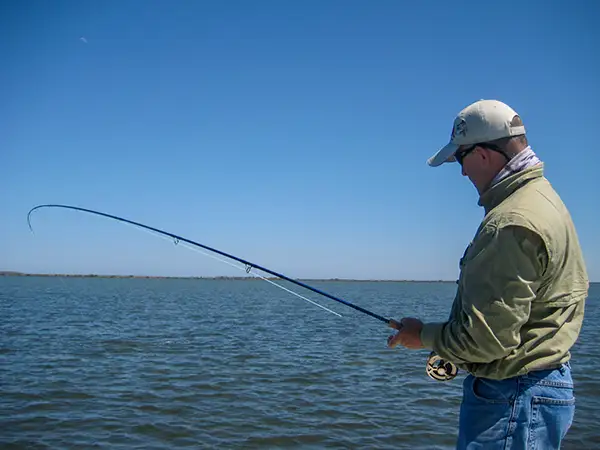
If you’re targeting redfish on the flats of Central Florida—from Mosquito Lagoon and the Indian River to the Banana River and New Smyrna Beach backwaters—your fly setup should match shallow water, spooky fish, and frequent wind. The good news: you don’t need exotic gear. A practical rod in the 5–8 weight range, a floating fly line, and a handful of proven leaders and flies will cover nearly every red you’ll see tailing, cruising, or laid up on the flats. Like every other style of fishing, it is difficult to find one rod that is effective for all sizes of fish and weather conditions. In this article, I will give you my best recommendations based on over 30 years experience fly fishing for redfish and over 20 years of fly fishing charter guiding experience.
Rod Weights: 5 to 8 Is the Sweet Spot
Redfish in Central Florida are usually targeted in knee-deep or less water where presentations are mostly short to mid-range, 25-50ft. Speed and accuracy matters more than raw distance. Here’s how to pick within the 5–8 weight lane:
- 5-weight: Ideal for calm mornings, ultra-shallow sight-fishing, and small, lightly weighted flies. You’ll feel the fish and enjoy the fight more. If your loops are not tight and line speed is lacking distance can become a factor.
- 6-weight: A versatile light setup that still protects delicate presentations yet handles small crab and shrimp patterns with bead-chain eyes. Great choice for skiff or kayak anglers who prize finesse but want a bit more authority than a 5-wt.
- 7-weight: This is my all around favorite and most used size. A 7-wt balances accuracy, wind-punching ability, and fish-turning power. It’s the one rod that can do almost everything on our lagoons—short shots at tailers, quick second casts to cruising pairs, and slightly bigger flies when mullet are thick.
- 8-weight: The go-to when the breeze is up, when you’re throwing heavier, lead-eyed patterns, or when you might encounter bull redfish,snook, jacks, or the occasional bigger drum.
Action & length: A crisp, fast-to-moderate-fast action in 9 feet is my preferred choice for quick shots and tight loops. telling someone what action to choose is like telling them what their favorite color should be. The best action is the one that allows you the tightest loops, best line speed, and most accuracy.
Lines: Floating Wins on the Flats
In skinny water, a weight-forward floating line is all you will need. It keeps your presentation high, allows quick pickups for second shots, and allows you to have a good idea where you fly is. Choose a line with a slightly front-loaded taper for rapid loading at short distances and stable loops in wind. Like rod action, however, everyone should choose the line that casts best for their particular style and ability. Never let someone tell you you have to have a certain line taper for catching any fish.
- Line rating: Many redfish tapers run a half-size heavy to help load modern rods quickly. That’s fine—especially on 7- and 8-weights—so long as turnover remains smooth.
- Coating & core: Warm-water coatings stay slick and don’t wilt on summer decks. A low-stretch core improves hook sets on long shots.
- Color: Color is a matter of personal preference. the fish should only be seeing the leader near them. I use lines in a variety of colors with equal success
Leaders & Tippet: Simple and Turnover-Friendly
Keep leaders straightforward so you can change quickly and trust your turnover in wind. A reliable starting point:
- Length: 9 feet in normal conditions; stretch to 10–12 feet in slick water or on extra spooky fish.
- Strength: 15 lb is the lightest you will need.
- Knots: Double uni-knot for tying sections together, canoeman loop knot to the fly for better action on crab and shrimp patterns. See my loop knot video below.
Reels & Backing: Dependable, Not Delicate
Redfish rarely melt drags like bonefish, but a smooth, sealed drag protects light tippet when a fish surges near the boat. Spool with 150–200 yards of 20 lb backing. Large-arbor spools pick up line quickly after a long run across a pothole flat.I prefer having the handle on your dominant hand side for faster pickup.
Flies That Match Central Florida Water
Our lagoons demand patterns that land softly, ride hook-point up, and move naturally in shallow grass and sand. Pack these families in muted, natural colors (tan, olive, copper, root beer) with a few brighter options for low light:
- Crab patterns: Kwan, Kung-Fu, Merkin-style, and micro crabs with bead-chain or light lead eyes.
- Shrimp patterns: EP-style shrimp, Borski Sliders, and simple craft-fur shrimp.
- Baitfish patterns: Small deceivers, EP minnows, and sparse brush flies for mullet-rich mornings.
Weights & hooks: Use bead-chain for ankle-deep water and switch to small lead eyes when reds are rooting in 2–3 feet. Size 2–6, strong saltwater hooks with a short shank are perfect.
Casting & Presentation Priorities
- Accuracy beats distance: Most shots are 30–50 feet. Practice quick two-stroke deliveries with minimal false casting.
- Low, tight loops: Keep backcasts heading up unless you are casting sidearm. A compact double haul keeps your loop narrow and your leader turning over.
- Lead the fish: Land the fly 1-3 feet ahead of a moving redfish, then short strips to cross its path. For tailers, drop softly past the head and move t right up to their nose.
- Quiet boat work: Soft feet, slow push-pole strokes, and stripped line managed in a basket or on a clean deck reduce blown shots.
Two Ready-to-Go Setups
All-around (wind-friendly): 7-wt, weight-forward floating “redfish taper,” 9-ft leader to 15 lb fluoro, bead-chain Kwan in tan (size 2). Perfect for breezy afternoons on Mosquito Lagoon or the Indian River.
Finesse (calm mornings): 5-wt, weight-forward floating line with a slightly longer front taper, 10–12 ft leader to 12–15 lb, micro-crab or small EP shrimp (size 4–6). Ideal for skinny water tailers in the grass.
Seasonal Notes for Central Florida
Winter–early spring: Clear water and sun make sight-fishing prime; lighter flies and longer leaders shine. Late spring–summer: More wind and bait—size up to 7–8 wt. Fall: Bait pushes reds shallow and active; versatile 7-wt with mixed crab/shrimp box covers everything.
Final Thoughts
For Central Florida redfish, keep it simple: a crisp 5–8 weight rod and a floating line will solve nearly every presentation puzzle you’ll face on our flats. Build a turnover-friendly leader, stock a small box of soft-landing crabs and shrimp, and practice quick, accurate deliveries. With that foundation, you’ll be ready when the backs and tails start pushing on the edge of the grass—no matter what the breeze is doing.