

Mosquito Lagoon Fishing Charters: How I Approach Sight-Fishing Redfish on the Flats
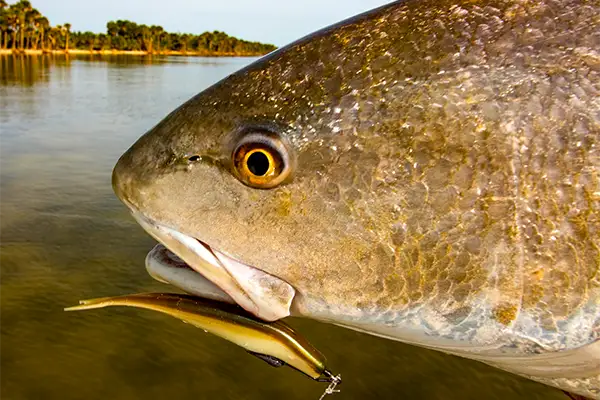
When you book a Mosquito Lagoon fishing charter with me, the goal on a technical sight-fishing trip is simple: put you in position to see a redfish first, make a clean shot, and watch the eat. That doesn’t happen by accident. Every decision—where I stop the boat or how I line up the sun and wind—is made to create one thing: a high-percentage shot in shallow water.
Start With the Shot You Want
Before I even slow the skiff, I’m already thinking about the shot you’re going to take. On the flats of Mosquito Lagoon, a good sight-fishing opportunity is usually a 20-40 foot cast to a fish that is either cruising or tailing with its head down. I want that fish moving generally toward us or quartering across, not directly away. If I can set the boat so you’re casting slightly across the fish’s path instead of straight at it, you can land the fly or lure ahead of the fish and let it intersect naturally instead of “bombing” it on the head.
On each flat I’m asking the same questions: Where is the light best? How do I minimize shadows which spook fish? How is the wind pushing the boat? W I’ll adjust where I pole and where you stand so that the majority of your shots fit that ideal window. Sometimes, however, fish can appear suddenly at any range on any side of the boat, Anglers must be ready to adapt to these scenarios in short order.
Boat Positioning: Quiet, Predictable, and Slightly Upwind
On a redfish flat, the trolling motor stays off when we're fishing. I’m on the poling platform, keeping the noise to a minimum. It also lets me control speed and drift without sudden corrections that send pressure waves across shallow water.
For tailing or stationary fish, I’ll stop the boat well outside your casting range and then ease in until you can make a comfortable shot. I’d rather you have to take a slightly longer cast to a relaxed fish than a short cast to a fish that’s already heard or felt us. For cruising fish, I’ll try to get inside the arc of their path so the boat isn’t directly behind them in their wake or directly in front of their nose.
Want to learn exactly how to cast to most redfish in Mosquito Lagoon. Watch my video on "How to catch tailing redfish".
Sun Angle and Glare: Giving You the Best Window
Light is everything in sight-fishing. In Mosquito Lagoon, I’m always trying to give you the best “window” into the water by controlling sun angle and glare. Ideally, I want the sun either over your casting shoulder or high enough that you’re looking down into the water, not into a mirror.
On a bright, calm morning, I may run past fishy water to start on a flat where the sun is behind us. As the sun climbs, I’ll adjust which shorelines we fish so you’re not staring straight into glare. On cloudy days, I may favor lighter bottom or sand holes where contrasts make fish stand out even with less direct light.
Clouds or sun, polarized glasses are a must. Anything but gray lenses are best. My favorite is a vermilion or copper colored lens.
Wind: Friend, Enemy, and Steering Wheel
Wind on a Mosquito Lagoon charter is not just something to fight, it’s something to use. A light wind can ripple the surface enough to hide us from fish while still letting us see into the water. A stronger wind dictates which direction we pole and which side of the boat you’ll cast from.
When possible, I’ll set the boat so you’re casting slightly downwind or cross-wind with your dominant hand facing open water. That keeps your line away from the push pole and my platform, and it prevents the fly or lure from crossing the boat on an errant cast. If I ask you to switch sides or positions on the bow, it’s simply to line you up so the wind helps you instead of fighting you.
When possible, I’ll set the boat so you’re casting slightly downwind or cross-wind with your dominant hand facing open water. That keeps your line away from the push pole and my platform, and it prevents the fly or lure from crossing the boat on an errant cast. If I ask you to switch sides or positions on the bow, it’s simply to line you up so the wind helps you instead of fighting you.
On windier days, I may shorten the distances between shots. Instead of long leads, we focus on quicker, more compact casts timed when the boat and the wind are both helping the line turn over.
Noise Discipline: The “Invisible” Part of Boat Control
In shallow water, noise and pressure waves travel a long way. I treat noise control as part of boat handling. That means:
- Using the push pole instead of bumping the trolling motor in and out of gear.
- Keeping hatches closed and organized so we aren’t dropping items on bare fiberglass.
- Limiting unnecessary movement on the bow when we’re in casting range.
- Stopping the boat early and letting it settle before you cast to a specific fish or school.
Most of this is invisible when it’s done right, but it often makes the difference between a redfish that tracks the fly or lure calmly and one that flares off before you ever get a shot.
Adjusting for Fly vs. Spin Without Changing the Fundamentals
The fundamentals—positioning, angle, light, and stealth—stay the same whether you book a fly or light-tackle Mosquito Lagoon fishing charter. The adjustments happen in how far I stop from the fish and how fast I let the boat approach.
On fly trips, I’ll usually give you more time and space to set up. I’ll stop the skiff a little farther out, allow you to get line off the reel, and wait for the right moment when the fish’s head is down or it’s quartering into the cast. For spin anglers, I can sometimes hold the boat a bit closer because you can reach farther with a compact cast and a light jig or soft plastic.
In both cases, I’m always watching the fish’s body language. If I see a redfish speed up, flare its fins, or change direction sharply, I’ll often ask you to hold the cast so we don’t throw at a fish that’s already on edge. There is usually another opportunity coming if we stay calm and deliberate.
Making the Most of a Mosquito Lagoon Fishing Charter
A technical sight-fishing day on Mosquito Lagoon is not about how many different spots we can hit; it’s about how many good looks we can create. Some days boat rides are only 5 minutes. Other days it means covering different depth zones until we find the right visibility, bottom, and bait. The constant is that every move is made with a purpose: set up the boat so you can see the fish, make a clean cast, and watch the eat.
If you’re planning a trip to the Orlando or New Smyrna Beach area and want a charter focused on sight-fishing redfish with either fly or light spinning tackle, my job is to handle the details—boat control, angles, light, and fish behavior—so you can focus on the shot.