

Redfish on the Fly in Mosquito Lagoon: Shots, Leads, and Flies
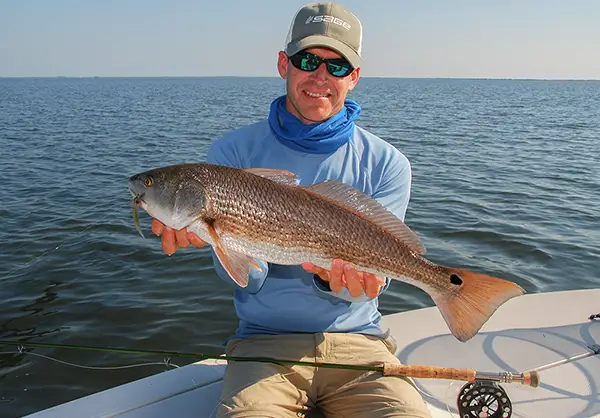
Mosquito Lagoon’s clear, shallow flats reward quick, accurate deliveries. Redfish are often feeding in just one or two feet of water over manatee grass or sand potholes. Wind, sun angle, and boat noise matter. Keep your head on a swivel, line untangled, and be ready to cast at any moment.
Spotting Redfish in the Lagoon
Look for backs, tails, and subtle pushes. In bright sun, polarized lenses with copper or amber tints work best to see fish; in low light, switch to a lighter tint. Tailing fish tip thier heads down on crabs and shrimp and other marine life often causeing their tail to break the surface. You may see the entire tail or just a timy piece of it. Other fish hold still or can be slowly cruising anywhere in the water column. Nervous bait spraying can mean a redfish is hunting underneath. I’ll pole to keep the sun behind you—your job is to stay quiet and ready.
The Quick Shot You’ll Use Most
Most opportunities are 20–40 feet and fast. casts under 20ft are no uncommon. Keep the maximum amount of line you can cast stripped off the reel, leader straight, rod in hand. The cast is a one, two, let it go. A low, sidearm stroke is often needed to avoid throwing shadows on spooky fish. If you need a second shot, an effective pick up and lay down is best.
Leading the Fish
Lead moving fish two to three feet in calm water; tailing fish need the fly to get inched from their nose. Aim so the fly lands just beyond fish’s travel path, then begin short, two-inch strips as the fish approaches. For tailers or slow cruisers, drop closer for a quick pickup with minimal splash. If a fish veers off, pause, then give one sharp tick to re-ignite interest. Remember to strip set only. Keep the rod low and drive the hook with your line hand.
Flies That Consistently Work
For the most part, the best fly is the one that the fish see without getting spooked. Shrimp and crab patterns in tan or olive are standards for grass flats. Use unweighted or lightly weighted flies for skinny water; small bead chain or lead eyes for potholes. Size 2–6 hooks cover most days. A touch of orange or pink can help mimic shrimp. Weed guards save casts when you’re working into grass. My top favorites are an unweighted bendback, a beadchain eye crab or shrimp, and an E P style minnow.
Check out this video on how to tie a bendback fly
Leaders, Knots, and Tippet
A nine-foot leader tapered to 15lb works most of the year. On high-sun, slick days, stretch to ten or twelve feet. Add a 25–30 lb bite tippet when snook are mixed in. Use a canoeman loop so the fly swims naturally. Always check knots after each fish; redfish can crush flies and fray tippet on shell.
Common Mistakes (and Fixes)
- Casting at the fish instead of its path → lead it.
- Too many false casts → 2 back casts then deliver.
- Trout-setting → strip set with the line hand while rod pointed at fish.
- Slack on the deck → keep it in the stripping basket.
- Wideo open loops - higher line speed and rod tip straight line path.
Boat Role and Communication
I’ll keep the skiff in position and call shots: “two o’clock, 40 feet, moving left.” If you do not see the fish immediately, point your rod to where you are looking. As soon as you see the target, start casting. If the cast does not land where you wanted, do not hope they will veer off path and get it, try another cast. When the eat happens, keep stripping until the line is tight and the fish turns; then lift the rod and clear the line to the reel.
When to Come
Winter through spring brings the best sight fishing on clear flats. Summer offers early tailers and afternoon thunderstorms. We’ll choose leeward banks when the wind is up and chase sun windows when clouds move through. There is never a "bad" month to fish here in Central Florida. To up your chances, consider getting a fly casting tuneup before your trip. You can also check my dedicated Redfish Charters page for more details on targeting this species.