

Sight Fishing 101: Techniques for Flats Fishing Success
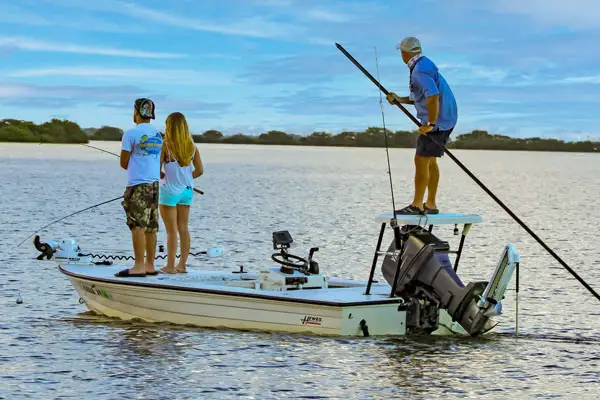
Sight fishing on the saltwater flats means you can see the fish, or the signs they create, before you cast. Instead of blind casting, you read the water looking for a fin, part of a fish, or subtle surface clues, then deliver an accurate, quiet presentation. The payoff is a visual eat from redfish, seatrout, snook, tarpon, bonefish, or whatever you are targeting.This style of fishing is exciting. The aniticpation while you stalk fish, and getting to see them eat or refuse your cast is addicting
The 3 S's of Sight Fishing: Stealth, Speed, Accuracy
If you aren't quiet, you will never get near the fish, once you are close, the clock is ticking and you cannot wait to cast or re-cast. If the cast does not land in front of the fish, you will never get a bite. Even if you are new to sight fishing, you can easily control the first two elements. On the flats, even the smallest sounds travel quickly through the hull and into the water. Shuffling feet, dropped pliers, or sliding coolers can spook fish long before you see them. Keep movements smooth and deliberate, place gear where it won’t roll, and avoid stomping or dragging on the deck. Quiet boat handling is just as important as accurate casting when it comes to getting close enough for a good shot.
Standing ready to cast is simple as well. Be prepared, be ready and start casting as soon as you can make an accurate shot. Learning to cast accurately, however, takes practice beofre you go. Details below
See More Fish: Light, Lenses, and Positioning
Sight fishing success depends on your ability to see the fish. Visibility below the surface and controlling glare are important. Mid-morning to mid-afternoon often gives the best overhead light and contrast. Wear quality polarized glasses (copper/amber tints excel on skinny water) and a brimmed hat to widen your viewing “window.” Work the flat with the sun at your back or quartering when possible, and the spotter communicates using the clock-face system—“11 o’clock, 60 feet, moving right”, so the angler can instantly aim and lead the fish.
Reading Water: Tails, Wakes, Pushes, and Nervous Water
Fishing in shallow water show themselves if you know what to watch for. A tail flicks when a fish tips to feed. A V-wake or push disturbs the natural wave pattern as a fish displaces water. Nervous water looks ruffled or dimpled compared with the surface around it as a school cruises. Anglers must constantly be scanning all directions. Some signs are long lasting and blatant. Some are noisy. Others are very quick and subtle even from huge fish. A 100+ pound tarpon can lie motionless on the surface with just a tiny piece of fin showing or a 3 poun snook can cause a huge blowup under a mangrove tree.
Tide and Current: Where Fish Must Travel
On a flooding tide, predators ride new water onto the flat to hunt shrimp, crabs, and baitfish. On a falling tide, they funnel off the flat toward edges, troughs, and channels. Plan your route—and your stake-out positions—so your shots happen at ambush points fish are already using.Some bodies of water, such as the Mosquito Lagoon and northern Indian River Lagoon in Florida are non-tidal. In these scenarios anglers must cover water using a push pole or electric motor searching for signs. Areas may include shorelines, shallow flats or drop-offs. Unlike the tidal influenced waters, you may be able to fish in the same spot for hours.
Accuracy First: Casting Keys for Fly and Spinning
Fly Casting Fundamentals
Fly casting accuracy starts with loop control. Fly Fishers International (FFI) emphasizes a straight rod-tip path and crisp stops to form narrow loops that cut wind and land softly. Practice short, medium, and long targets; then mix change-of-direction drills. In wind, lower your trajectory and reinforce the stop to tighten the loop. Add a roll-cast pickup or single-haul to launch quick second shots without false casting over the fish.
Here is a video on improving your accuracy while fly casting, a skill all anglers need
Practical Accuracy Drills (Fly or Spin)
- Pinpoint Accuracy: Place hoops/buckets at 20, 30, and 50 feet (or paces). Make five shots to each, keep score, and rotate angles.
- Sidearm Casting: Stretch a cord or PVC bar two feet off the ground and practice side-arm deliveries under it to simulate casting under mangroves or minimizing shadows
- Moving intercept: Have a partner walk a target slowly across your field; practice leading the target by less than 5 feet.
- Windy Days:Practice on a windy day to ensure you have tight loops and proper line speed
If you want to try out your fly casting skills, I offer fly fishing charters near Orlando year round.
Spin Casting Essentials
Spin anglers must be able to cast at all angles with speed and accuracy. Having a "line brake" like using your index finger or of hand is essential to avoid hitting trees or shorelines, maintaining control, and keeping lures out of the grass. One target may be only a few feet from the boat and the next over 50ft. if two anglers are on the front of the boat, one must be casting backhand to avoid the other angler.
Here, I demonstrate how to accurately and quietly cast to fish close to the boat, shoreline, or other structure using a specialized casting technique known as the pitch cast.
Make the Shot Without Spooking Fish
- Lead the fish: Land ahead of its path so the fly or lure meets the fish naturally; head-shots often blow them off the flat.[1–2]
- Quiet entries: Spin cast that come from high in the air often land too loud, keep them low; for flies, lengthen leaders and unweight patterns when fish are shallow and skittish.
- Wind management: Expect awkward angles and backhand deliveries. Use a low, side-arm delivery into the wind and keep false casts to a minimum.
- Set correctly: Strip-set with flies (rod low, line hand drives the hook); with spinning gear, reel down and sweep firmly while maintaining steady pressure.
Presentations That Trigger Eats
Redfish & Seatrout (skinny water): Fly—sparse shrimp/crab patterns with light or no weight; land softly, short strips, then pause. Spin—1/8–1/4 oz jig with paddletail or shrimp plastic; start the retrieve as the fish approaches the intercept point.
Bonefish: In bright, clear conditions, downsize and go sparser; in wind or off-color water, size up slightly. Lead fast cruisers farther; drop closer for tailers, then strip as the fish tips.
Tarpon on the move: Present off the leading shoulder and swim the fly or lure with the school’s direction rather than across it to avoid crossing fish.
Recommended Gear (Simple, Proven, Versatile)
Fly Tackle
- Rods: 5-7-weight for redfish/trout; 9-weight when wind or snook are in play; 10–12-weight for larger tarpon.
- Lines: Warm-water floating line. Color not important.
- Leaders: Start at 9 ft; adjust tippet to species (12–20 lb for redfish/snook; heavier bite tippet for tarpon).
- Polarized eyewear: Copper/amber lenses boost contrast and help you spot tails and fish ni the water earlier.
Spinning Tackle
- Rod & reel: 7’–7’6” medium-light to medium or medium-light power, fast action; 2500–3000-size reel for line pick-up and balance.
- Main line: 10–15 lb braid for most flats work.
- Leader: Fluorocarbon or mono 15–30 lb depending on species/structure—lighter for spooky bonefish, heavier around oysters/mangroves.
Teamwork on the Bow: Talk Like a Guide
Use the shared language of clock-face, distance, and movement to align your eyes with the poler’s. 12 o'clock is the bow of the boat. Ask for micro-corrections: “left two feet… strip… stop.” Keep the line cleared on the deck so when the call comes, the shot goes now—not after a tangle.As soon as the spotter calls out a fish, immediately point your rod to where you are looking.
See the fish, then cast
Trust your eyes. If you do not see the fish, it is likely you are not looking where the fish is. That means your cast is not going where the fish is. Let your guide direct you to the target. You will always make a much better presentation if you see the target instead of guessing. I always tell my anglers, "guessing where the fish is, is like playing blindfolded golf"
Ethical Handling: Keep the Flats Healthy
Good handling preserves fragile fisheries. Keep fish wet, limit air exposure, mind the barbs, and release promptly. Follow local regulations and best-practice guidance for safe handling and species-specific rules.
A Two-Week Tune-Up Plan
- Days 1–3: 15 minutes/day of hoop targets at 30–50 feet; keep score.
- Days 4–7: Add cross- and into-the-wind reps; practice low-window side-arm casts.
- Week 2: Simulate moving fish by dragging a hoop slowly; practice leading and starting the retrieve so the lure/fly is moving before the fish arrives.
Why Coaching Speeds Results
Even seasoned anglers benefit from an hour with a professional casting instructor. Fly Fishers International modern curricula focus on loop control, tracking, trajectory, and fault correction—the exact skills that turn quick, accurate shots into more eats on real flats.
Ready to put this into practice on real fish? Book a guided sight-fishing trip (fly or spinning) with on-the-water coaching, tailored to your goals: flatsfishingtrips.com/sightfishing.