

Winter Fishing Options in Central Florida
Cooler air, clear water, and hungry fish—winter is prime time to fish Central Florida.
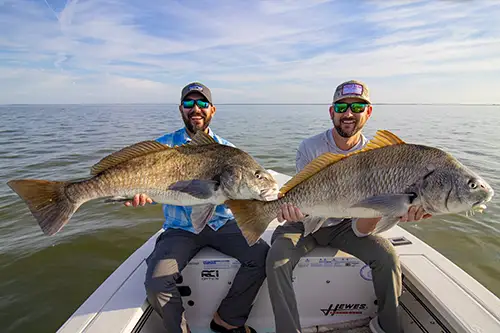
How is winter fishing in Central Florida?
From December through mid March, Central Florida settles into a rhythm of cool mornings, bright afternoons, and frequent but brief cold fronts. Those fronts drop air and water temperatures just enough to concentrate fish, clear the water, and create predictable feeding windows. Whether you’re casting to bedding bass, chasing the famed St. Johns River shad run, or sight-fishing redfish, drum, and seatrout on the flats of the Indian River and Mosquito Lagoon, winter rewards anglers who time the weather and move with stealth.
Florida Bass: Short Windows, Big Rewards
Largemouth bass fishing shines in winter because fish slide shallow to stage and spawn on sunny afternoons, especially after a cold front rebounds. Look for protected coves with hard bottom, emergent pads, or scattered grass near deeper water. On bluebird post-front mornings, bass may sulk off the first break; by midday, sunlight warms dark bottom and isolated cover, pulling fish to the edges.
Productive presentations include slow-rolled lipless crankbaits yo-yoed along grass lines, suspending jerkbaits with long pauses over points, and classic Texas-rigged worms or creature baits pitched to beds and lanes. When fish are spooky in gin-clear water, downsize to finesse plastics on light line or throw a compact swimbait with a steady, subtle retrieve. Keep a punching rod ready: a midday warmup can push bass under whatever winter vegetation remains, and a well-placed creature bait can trigger the day’s biggest bite.
Pro tip: Plan around fronts. The last calm, warm afternoon before a front and the first bright afternoon 24–48 hours after often produce the most consistent action.
St. Johns River Shad Run: Fast, Fun, and easy catching
Each winter, American and hickory shad travel up the St. Johns River in from the Atlantic Ocean, creating one of Florida’s most accessible seasonal fisheries. It's like a salmon run in Florida. The run typically ramps up in January, peaks through February, and can linger into early March depending on water levels and temperature. You’ll find fish gathering on current edges, above and below sandbars, and in the deeper bends from State Rd 46 down to the 528 Hwy, with action migrating as flows change.
Shad are perfect targets for ultralight spinning gear and 3-5-weight fly rods. On spin tackle, small shad darts, micro spoons, and 1/16–1/8 oz. jigheads with bright tails are the norm. For fly anglers, have a variety of weighted and unweighted winnow patterns from size 6-10. Keep moving until you tick fish—when you find a pod, doubles are common and the action can stay hot.
Safety & access: Watch for floating vegetation after strong north winds, respect idle-speed zones, and give bank anglers space at popular sandbars. Because shad have soft mouths, use barbless or pinched-barb hooks for easy releases. In addition to the shad, there are always a variety of panfish, speckled perch, and bass to be caught as well.
Flats Fishing the Lagoons: Sight-Fishing at Its Best
On the Indian River and Mosquito Lagoon, winter’s lower, clearer water can offer the best sight fishing of the year. Redfish, seatrout, and black drum are plentiful throughout the winter months. Winter brings about schooling behavior and it is not uncommon to see groups of over 100 fish
Success here is all about stealth ,speed, and accuracy, fly or spinning tackle. Shallow draft boats are necessary to access the areas with the best tailing fish action. Sight fishing for redfish, drum and trout in Mosquito Lagoon presents the ultimate angler challenge. You can book a Mosquito Lagoon flats fishing charter to experience it firsthand. For conventional tackle, rig 3–4" paddle tails on 1/8 oz. jigheads, a DOA shrimp, or weedless jerkbaits for ultra-skinny water. Fly anglers should carry tan and olive shrimp patterns, small crab flies, and sparse baitfish in size 4–2 on floating lines with 15 lb. leaders.
Redfish and drum can be found over grass and sand bottoms. The seatrout, prefer sandy bottom. This is the time of year to sight fish for trophy sized seatrout in less than 2 feet of water.
Black drum, some approaching 40 pounds, can be found tailing in shallow water early in the day and out in 5-8ft of water as the sun gets higher. The can be caught on heavier spinning tackle with shrimp and crab or on 9-11wt flyrods. Smaller drum will stay on the flats all day and are best targeted with 5-7wt rods.
Gear & Tactics That Pay Off in Winter
- Florida gets cold and it's different than northern cold
- Layer smart: Don't be caught off guard. Better to have too many layers than not enough.
- Downsize leaders: Clear water demands stealth: 15 lb. fluorocarbon for inshore, 5–8 lb. for shad, and 12–20 lb. for heavy bass cover.
- Fish the clock: Short but intense bite windows are common. Prioritize late-morning to mid-afternoon on bright, calm days.
- Wear good glasses Winter brings clear water but you still need polarized lenses to see the fish - anything but gray lenses.
Plan Your Winter Trip
Winter in Central Florida offers diverse, high-quality fishing within a short drive—classic bass in lakes and rivers, fast-action shad on the St. Johns, and world-class sight-fishing on the lagoons. Time your outing around a warming trend, approach quietly, and match your presentations to the clarity and mood of the fish. Do that, and winter may quickly become your favorite season on the water.